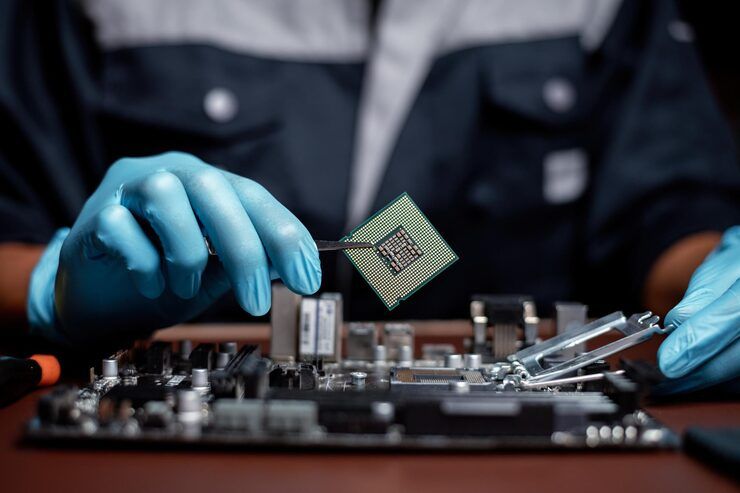
Electronic component sourcing is the process of identifying, evaluating, and obtaining the electronic parts required to manufacture or maintain electronic products. These components include semiconductors, integrated circuits, resistors, capacitors, connectors, sensors, and power management devices. Electronic component sourcing plays an important role in industries such as automotive manufacturing, telecommunications, industrial automation, consumer electronics, medical equipment, and aerospace technology.
Semiconductor supply chains connect raw material providers, semiconductor manufacturers, assembly facilities, distributors, and electronic equipment manufacturers. Each stage contributes to the availability, performance, and reliability of electronic products. As electronic systems become more sophisticated, businesses need to understand sourcing strategies, supplier relationships, component quality, inventory planning, and procurement risks to maintain consistent production operations.
Importance of Electronic Component Sourcing
Supporting Manufacturing Operations
Reliable electronic component sourcing helps manufacturers obtain the parts required for production within planned schedules. A shortage of a single integrated circuit or power semiconductor can delay an entire manufacturing process, even when all other components are available. Proper procurement planning helps organizations identify supply constraints early and coordinate component availability with production requirements.
Managing Supply Chain Costs
Electronic procurement involves more than the quoted price of a component. Organizations must consider transportation, import duties, inventory storage, inspection, testing, and potential production delays. Total cost analysis provides a more complete understanding of procurement expenses and helps businesses evaluate different suppliers using consistent criteria.
Maintaining Product Quality
Electronic components must meet defined electrical, mechanical, environmental, and performance requirements. Sourcing from qualified manufacturers and authorized distributors helps organizations maintain traceability and reduce the risk of counterfeit or incorrectly specified parts. Quality assurance is especially important in automotive electronics, medical devices, aerospace systems, and industrial control equipment.
Understanding the Semiconductor Supply Chain
Raw Materials and Wafer Manufacturing
Semiconductor production begins with materials such as high-purity silicon and other specialized substances. Silicon wafers undergo several manufacturing processes, including cleaning, deposition, photolithography, etching, and doping, to create microscopic electronic structures. These processes require specialized equipment, controlled environments, technical expertise, and carefully managed production conditions.
The availability of raw materials, manufacturing equipment, energy, and specialized chemicals can influence semiconductor production schedules. Because semiconductor fabrication requires significant infrastructure and investment, expanding manufacturing capacity can take considerable time.
Semiconductor Fabrication and Assembly
During semiconductor fabrication, manufacturers create integrated circuits on semiconductor wafers. The wafers are subsequently tested, separated into individual dies, packaged, and subjected to additional inspection. Packaging protects the semiconductor and provides electrical connections to the larger electronic system.
Some companies design semiconductor products but outsource fabrication to specialized foundries. Other manufacturers operate their own fabrication facilities or use a combination of internal and external production. Assembly and testing may also take place at separate facilities, creating a global network of suppliers and manufacturing partners.
Distribution and Final Integration
After manufacturing and testing, components move through distribution networks before reaching original equipment manufacturers, contract manufacturers, or electronic product developers. Authorized distributors commonly provide product documentation, traceability information, inventory visibility, and technical support.
During final integration, electronic components are assembled onto printed circuit boards and incorporated into larger systems. Manufacturers then perform appropriate functional, electrical, and reliability testing to verify that the finished product meets its specifications.
Types of Electronic Components Used in Manufacturing
Semiconductor Components
Semiconductor components include microprocessors, microcontrollers, memory devices, power management integrated circuits, diodes, transistors, and application-specific integrated circuits. These devices perform functions such as computation, data storage, signal processing, switching, and power conversion.
Semiconductor sourcing requires attention to manufacturer part numbers, operating temperature ranges, voltage ratings, package types, electrical characteristics, and product lifecycle status. Even components with similar descriptions may not be interchangeable in a particular circuit.
Passive Electronic Components
Passive components include resistors, capacitors, and inductors. They support functions such as current control, filtering, energy storage, signal conditioning, and electromagnetic interference management. Although individual passive components may appear simple, their specifications can significantly affect circuit stability and product reliability.
Sourcing teams should evaluate tolerance, voltage rating, temperature characteristics, physical dimensions, and material requirements. For applications with demanding operating conditions, the component's documented reliability and suitability for the intended environment are particularly important.
Connectors, Sensors, and Electromechanical Parts
Connectors, sensors, relays, switches, and other electromechanical components help electronic systems interact with their surroundings. These parts may be exposed to vibration, humidity, temperature changes, dust, or repeated mechanical movement.
Procurement teams should assess contact materials, connector compatibility, environmental ratings, mechanical durability, and applicable industry standards. Correct specification matching reduces the risk of installation difficulties and premature product failure.
Key Factors in Electronic Component Procurement
Supplier Qualification and Evaluation
Supplier qualification is an important part of electronic component procurement. Organizations generally review a supplier's business history, product authorization, quality management procedures, traceability practices, delivery performance, and ability to meet technical requirements.
A structured supplier evaluation process can include document verification, sample inspection, quality audits, and performance monitoring. Organizations should also understand whether a supplier is the original manufacturer, an authorized distributor, or an independent reseller because these channels may offer different levels of traceability and assurance.
Component Availability and Lead Time
Lead time refers to the period between placing an order and receiving the required components. It can vary according to manufacturer capacity, order quantity, product demand, transportation arrangements, and component complexity.
Procurement teams can monitor supplier quotations, manufacturer announcements, inventory levels, and production forecasts to identify potential shortages. For critical components, evaluating qualified alternatives before a shortage occurs can help reduce production interruptions.
Total Cost of Ownership
Total cost of ownership includes the direct and indirect expenses associated with acquiring, storing, handling, and using components. For example, a lower quoted price may not provide the best overall outcome if the supplier has uncertain delivery schedules, insufficient documentation, or a high defect rate.
A complete cost evaluation considers purchase price, freight, duties, inspection, storage, financing, quality failures, and the possibility of production downtime. This approach supports more informed procurement decisions without relying solely on the lowest quotation.
Common Challenges in Semiconductor Supply Chains
Component Shortages and Demand Fluctuations
Semiconductor demand can change rapidly because of developments in artificial intelligence, data centers, automotive electronics, industrial automation, and consumer devices. When demand rises faster than available manufacturing capacity, certain components may experience longer lead times or limited allocation.
These conditions can affect production planning and inventory requirements. Forecasting demand, communicating with suppliers, and reviewing critical component availability can help organizations respond to market changes more effectively.
Geographic Concentration and Logistics Risks
Semiconductor production depends on facilities, suppliers, and transportation networks distributed across multiple countries. Concentration of specialized manufacturing activities in particular regions can expose supply chains to natural disasters, geopolitical tensions, trade restrictions, and logistical disruptions.
Companies can assess these risks by mapping important suppliers, identifying dependencies on individual facilities, and reviewing alternative sourcing options. Regional diversification may improve resilience, although an alternative supplier must still meet the required technical and quality standards.
Counterfeit Components and Product Obsolescence
Counterfeit electronic components can contain incorrect materials, altered markings, reused parts, or specifications that do not match the original product. Such components may cause equipment malfunction, reduced reliability, or safety concerns.
Product obsolescence creates another challenge when manufacturers discontinue components or stop recommending them for new designs. Maintaining lifecycle records, monitoring product change notifications, and qualifying suitable replacements can help businesses prepare for discontinuation events. For difficult-to-source components, additional inspection and independent testing may be appropriate.
Strategies for Improving Supply Chain Management
Maintain an Accurate Bill of Materials
A bill of materials, commonly called a BOM, lists the components required to manufacture a product. An effective BOM records manufacturer part numbers, quantities, approved suppliers, specifications, lifecycle information, and qualified alternatives where applicable.
Regular BOM reviews help engineering and procurement teams identify discontinued parts, specification mismatches, and single-source dependencies. Accurate component records also support production planning, inventory management, and quality investigations.
Develop Multiple Qualified Sources
Dual sourcing and multi-source procurement involve qualifying more than one supplier or manufacturer for selected components. These approaches can reduce dependence on a single source when the original supplier experiences capacity constraints or delivery problems.
However, an alternative component should not be accepted based only on a similar part number or physical appearance. Engineering teams should evaluate electrical performance, package compatibility, operating conditions, regulatory requirements, and any necessary design or production changes before approving a substitute.
Improve Inventory Forecasting
Inventory planning balances the need for component availability against the financial and operational risks of holding excess stock. Insufficient inventory can interrupt production, while excessive inventory can increase storage expenses and expose businesses to component deterioration or obsolescence.
Organizations can use demand forecasts, historical consumption, supplier lead times, production schedules, and safety-stock policies to establish appropriate inventory levels. Critical components with long replenishment times may require different planning rules from commonly available parts.
Use Digital Procurement and Supply Chain Systems
Electronic procurement software, enterprise resource planning systems, and supply chain management platforms help organizations maintain supplier records, compare quotations, track purchase orders, and monitor inventory. These systems can also support demand forecasting, lifecycle alerts, and procurement reporting.
Integrating purchasing information with engineering and production records improves visibility across departments. Nevertheless, software outputs depend on the accuracy and timeliness of the underlying data, so human review and supplier verification remain important.
Quality Control and Semiconductor Reliability
Component Authentication and Traceability
Component authentication helps determine whether parts are genuine and consistent with their documented origin. Useful records may include manufacturer labels, lot numbers, certificates of conformance, authorized distribution documentation, and traceability information.
Organizations should apply risk-based inspection procedures, especially when components come from unfamiliar suppliers or the independent distribution market. Visual inspection alone cannot establish authenticity in every case, so higher-risk components may require additional laboratory testing.
Testing and Technical Verification
Electrical testing, functional testing, dimensional inspection, and environmental evaluation can help verify component suitability. The appropriate methods depend on the component type, application, operating conditions, and consequences of failure.
For example, automotive and industrial electronics may require particular temperature and reliability considerations, while high-speed communication equipment may demand careful signal-integrity evaluation. Quality requirements should be established before procurement rather than after components arrive.
Future Trends in Electronic Component Sourcing
Artificial Intelligence and Data-Driven Forecasting
Artificial intelligence and predictive analytics are increasingly relevant to supply chain planning. Depending on data quality and system design, these technologies can help identify demand patterns, estimate inventory requirements, and flag possible supply risks.
Their effectiveness depends on reliable historical information, current supplier data, and appropriate human oversight. Forecasts should be treated as decision-support tools rather than guarantees of component availability.
Sustainable and Responsible Sourcing
Sustainable electronics manufacturing involves considering material use, energy consumption, waste reduction, product durability, and end-of-life management. Procurement teams may also assess supplier environmental practices and applicable regulatory requirements.
Responsible sourcing can support better documentation and more transparent supplier relationships. Requirements vary by market and application, so businesses should verify the regulations and standards relevant to their products and destinations.
Supply Chain Resilience and Lifecycle Planning
Supply chain resilience focuses on maintaining operations during disruptions and recovering efficiently when problems occur. Strategies include supplier diversification, contingency planning, critical inventory management, component lifecycle monitoring, and collaboration between engineering and procurement teams.
As electronic systems become more complex, lifecycle planning is likely to remain an important part of semiconductor procurement. Organizations that identify risks early can evaluate alternatives in a controlled manner rather than making urgent decisions during a shortage.
Conclusion
Electronic component sourcing and semiconductor supply chains are essential to modern electronics manufacturing. From raw materials and semiconductor fabrication to distribution, component testing, and final product assembly, each stage influences availability, quality, cost, and delivery performance.
A structured sourcing strategy combines supplier qualification, accurate bills of materials, lifecycle monitoring, inventory forecasting, quality assurance, and risk assessment. By understanding these activities, manufacturers and procurement professionals can make informed decisions, manage supply chain uncertainty, and support more reliable electronic production.